
AI Readiness
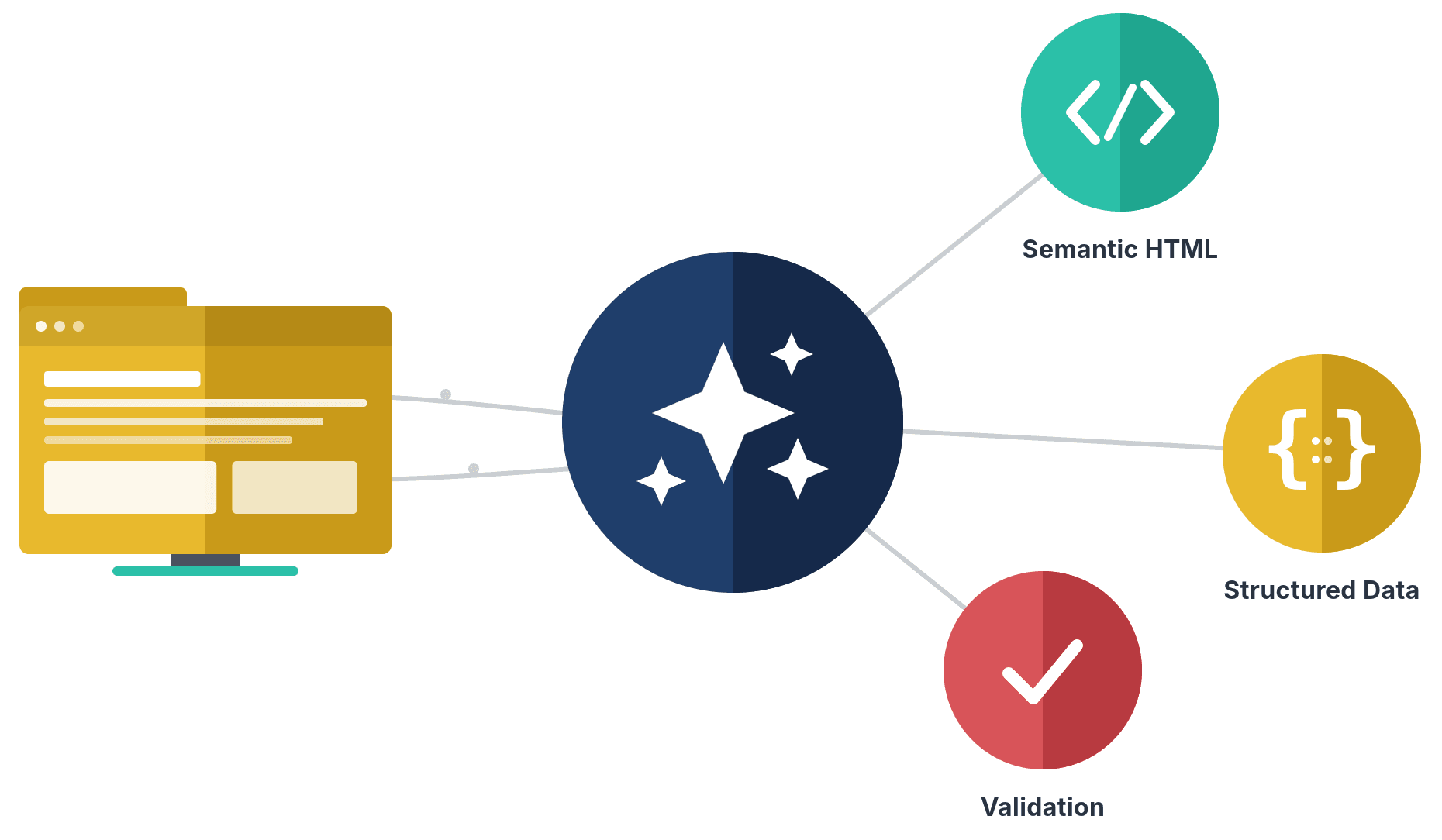
Is your website ready for how people search today?
Search behavior is changing. A growing number of people now start with AI assistants: ChatGPT, Claude, Google’s AI Overviews, Perplexity, and others, instead of typing a query into a search engine and browsing through results. These platforms don’t show a list of links. They crawl the web for information, synthesize it, and deliver a direct answer. If your website isn’t seen as quality source material, it doesn’t get cited. It just doesn’t show up.
Seer Interactive’s September 2025 study found that organic click-through rates dropped 61% for queries where Google’s AI Overviews appeared. However, sites cited within those overviews earned 35% more clicks than they would from a traditional top-10 result. The gap between being cited and being ignored is widening every month.
What AI Search Readiness means for your website
Traditional SEO taught us to write for algorithms that rank pages. The new challenge is writing for AI systems that extract and cite information. Those are related but meaningfully different goals. By early 2026, the overlap between top-10 Google rankings and AI Overview citations had collapsed from 75% to between 17% and 38% (Ahrefs / BrightEdge). In other words, a site can rank well in traditional search and still be largely invisible to AI-generated answers.
An AI assistant answering the question “Who can help me with WordPress maintenance in Sonora, California?” isn’t scanning for keywords. It’s looking for a page that clearly and directly answers questions like:
- What does this business do?
- Who do they serve?
- Where are they located?
- Why would someone trust them?
If your website circles around those questions without directly answering them, you’ll be passed over in favor of someone else whose content is easier to interpret.
There’s a new audience you may not have considered
The Nielsen Norman Group’s April 2026 article “AI Agents as Users” makes a point worth considering:
AI agents (systems that pursue a goal by iteratively taking actions, evaluating progress, and deciding its own next steps) are now interacting with the same digital interfaces we design for people.
The practical implication: The same guidelines designed to serve people with disabilities also make web pages more legible to AI agents. That convergence makes accessibility not just a compliance consideration, but a direct connection to how you get found.
What the service includes
We evaluate your site against the specific signals that AI platforms use to understand, trust, and cite a business. Then we make the necessary changes.
The work covers three interconnected areas.
On-page content: how your pages are written, how they’re structured, whether they answer questions directly, and whether they clearly establish who you are, what you do, and where you operate.
Structured data: specifically a technology called schema markup. Schema markup is code added to your website that explicitly tells AI systems (and search engines) how to interpret your content, including critical information like the business name, services, physical location, and contact info. Without it, AI platforms have to infer that information on their own — and they don’t always get it right.
BrightEdge research found that sites implementing structured data saw a 44% increase in AI search citations, and pages with schema markup are up to three times more likely to appear in AI Overviews.
Google Business Profile: review and optimize your Google Business Profile, ensuring the information there is consistent with your site’s schema — a signal AI systems use to verify and trust business information.
All areas matter. Content is what gets cited. Structured data is what ensures the citation is accurate.
How we work
We start with an audit of your current site, evaluating it against the questions that AI platforms implicitly try to answer about your business. You’ll receive a plain-language report of what’s working, what’s missing, and what to address first.
From there, we develop and implement the changes: rewriting content sections, adding or correcting structured data, and verifying the results against current AI search behavior. We also document where your site appears in AI-generated answers for your key search terms — before and after the work — so you have a clear record of what changed.
Because we work exclusively with WordPress websites, we can implement changes directly rather than working around other platforms’ limitations.
For clients on ongoing maintenance, we include periodic citation monitoring and flag anything worth adjusting as AI platforms evolve.
Find out where you stand
Not sure how your site is performing for AI search? Our self-service AI Readiness Audit evaluates your homepage within minutes and tells you exactly where you stand. There’s no cost and it’s a great place to start.
